-
Casters
▾
-
Light Duty Casters Up to 350 Lbs
-
Medium Duty Casters Up to 1,500 Lbs
-
Heavy Duty Casters Up to 40,000 Lbs
-

Track Casters
-
Stem Casters All Stem Types
-
Stainless Steel
-
Pneumatic Casters Ait & Flat Free
-
Furniture Casters All Styles
-
High Temp Casters Up to 550 ˚F
-
Metric Casters
-

Leveling Casters
-
Spring Loaded
-
- Wheels ▾
- By Application ▾
- Accessories & Parts ▾
- Material Handling Products ▾
- Volume / Resale


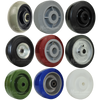












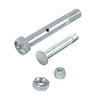
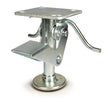

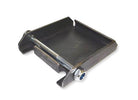





Kitchen Casters: Caster Rigs

Commercial kitchens are one of the toughest environments you can put a caster in. Heat, grease, oil, chemicals, and wash downs will quickly wear down the caster and expose weak components.
If your casters aren't built for rough treatment like this, they'll fail exponentially faster. The components you choose for your casters play a major role in their durability, service life, and how frequently they need to be replaced.
Rigs, as the part that holds the whole caster together, are extremely important. Choosing a rig with the right material, seal or dust cover can save you time and money, so you can focus on the food instead.

Rig Material
Water, cleaning chemicals, and frequent washdowns are part of everyday sanitation in commercial kitchens, but they're also tough on casters.
Standard steel caster rigs are typically zinc-plated to stave off rust and corrosion, but prolonged exposure to moisture will lead to rust much sooner. Upgrading to stainless steel provides much greater corrosion resistance with its higher chromium and nickel content, helping extend the life of your caster in wet and frequently sanitized environments.
Stainless steel caster rigs are offered in two variants: the common 304 stainless and the more premium 316 stainless. 316 stainless has a composition including molybdenum and an even higher nickel content, which combined provide even better corrosion resistance.

Seals and Dust Covers
Another aspect of a caster rig that can be vulnerable in a kitchen application comes in when it is a swivel rig. A swivel caster is useful for when you need to be able to move carts and racks around freely, but the swivel section's moving parts are also susceptible to getting clogged up or rusted. Dirt, debris, or frying oil can physically slow or stop the swivel section's movement, and water and chemicals can rust ball bearings. These effects can be delayed using a seal or dust cover.
Swivel Seals
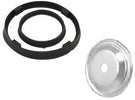
Swivel seals offer the best protection possible to a caster's swivel section, providing a ring of protection from debris around the ball bearings. Some caster rigs have swivel section seals already installed, and some may be added as an additional part.
One issue with swivel seals is that they can reduce the caster's ability to freely swivel, making it take more effort to move.
Swivel Seals
Swivel seals offer the best protection possible to a caster's swivel section, providing a ring of protection from debris around the ball bearings. Some caster rigs have swivel sections already installed, and some may be added as an additional part.
One issue with swivel seals is that they can reduce the caster's ability to freely swivel, making it take more effort to move.


Another possible issue with swivel seals is heat resistance.
The seals are made of rubber, which melts when exposed to high temperatures. While high-temp options are offered, they are still limited in heat resistance.
If you're needing casters that are both able to swivel and resistant to high temperatures, consider a dust cover instead.

Dust covers are also used when you want to protect a caster's ball bearings, but may need to be able to survive higher temperatures. Dust covers typically are manufactured with the rig, already installed, and come in plastic or metal variants.
Plastic covers are rated for temperatures up to 180 degrees Fahrenheit, while metal can withstand higher temperatures.
Summary of Kitchen Rigs
Consider the following below for a longer-lasting caster in your kitchen:
Stainless steel rigs hold up better to corrosion, and 316 stainless steel holds up the best.
Swivel seals provide the best protection to the swivel section, but are heat restrictive.
Metal dust covers on a caster allow the swivel section to be both protected from debris and heat resistant.
Depending on the caster, the swivel seal may be a separate part or already installed. Dust covers are manufactured with the rig, so cannot be installed later if picking a rig without a dust cover.

Final Thoughts
Commercial kitchens are harsh environments. The right caster setup can measure up, decreasing downtime and the cost of replacement. If you're outfitting new equipment or replacing failed casters, send us your specs - we'll find you something that holds up.
If you have any further questions or need help, feel free to call us at 800-345-0425, Monday through Friday 7am to 4:30 PM CST, or contact us.
Browse Kitchen & Restaurant Casters
Also in Caster Knowledge

Measuring Threaded Stem Casters
Threaded stem casters can be difficult to measure. Learn how to measure stem diameter, length, and thread pitch for an exact replacement fit.

High Temp Dual Wheel Casters
Discover high-performance dual wheel casters built for low clearances, heavy loads, and extreme temperatures up to 425°F, with excellent rolling and swiveling performance.

CG-MAX Green Poly on Aluminum Caster Wheels
"No Compromise" Casters & Wheels: Discover how wheel diameter, tread shape, bearings, and floor conditions affect rolling performance, and why CG-MAX polyurethane on aluminum wheels deliver efficient, durable performance.


