-
Casters
▾
-
Light Duty Casters Up to 350 Lbs
-
Medium Duty Casters Up to 1,500 Lbs
-
Heavy Duty Casters Up to 40,000 Lbs
-

Track Casters
-
Stem Casters All Stem Types
-
Stainless Steel
-
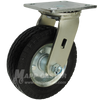
Pneumatic Casters Ait & Flat Free
-
Furniture Casters All Styles
-
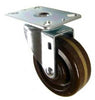
High Temp Casters Up to 550 ˚F
-
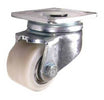
Metric Casters
-

Leveling Casters
-
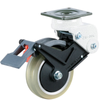
Spring Loaded
-
- Wheels ▾
- By Application ▾
- Accessories & Parts ▾
- Material Handling Products ▾
- Volume / Resale


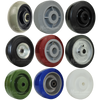


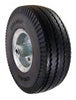
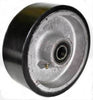
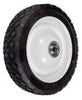
















Warehouse Casters

Most warehouses have concrete oors that don't require as much
care/protection as hardwood & tile oors do. Warehouse environments are
typically enclosed from the outside element with little debris, because of
this, we have a greater selection of casters to pick from. We will look at the two
main types of casters & see which option might be suited for your type oor.
Hard Wheel Casters

Hard wheels roll well on smooth
surfaces. Steel, phenolic & plastic wheel
casters are suited for warehouses that
have smooth concrete. Typically, steel
casters hold the most capacity followed
by phenolic casters then plastic casters.
Steel casters are resilient casters that
give you more capacity in exchange for
oor protection. Steel casters are the roughest on oors & may damage your
concrete oors with extended use. Especially if its something being moved
back in forth in the exact same spot. Phenolic caster's hard resin wheels wont
damage your concrete oors, but the wheel will wear down as a trade off.
Luckily the wheels can be easily replaced & they're relatively inexpensive.
Phenolic casters have similar capacities to steel casters. As a bonus, phenolic
casters are resistant to oils, grease & solvents in case of accidental spills. Plastic casters are very similar to phenolic casters except they hold about half their
capacity. Plastic casters are a budget friendly options for people who don't
need a lot of capacity.
We recommend casters with hard wheels for smooth surfaces that don't
have a lot of debris. Casters with a hard wheel will not roll easily over large
debris.
Soft Wheel Casters

For rough oors & oors with large
debris, we recommend polyurethane &
rubber casters. There's many types of
polyurethane & rubber casters, but I will
refer to all of them generally. As a rule
of thumb, polyurethane typically isn't
as durable as rubber wheels, but holds
more weight; rubber typically provides
more cushion than polyurethane, but doesn't typically provide as much
capacity. Polyurethane casters can have solid polyurethane wheels or
polyurethane treaded wheels with an aluminum, steel or plastic core. These are
the most common types of polyurethane casters. All of these options are
perfectly ne for the warehouse. This environment typically won't put your
casters in direct sunlight all day or keep them constantly wet which is some of
the weaknesses of polyurethane that will decrease the wheels life span. Its
possible to have capacities similar to steel casters depending on your choice
of polyurethane casters.
Rubber casters can have solid rubber wheels or rubber
treaded wheels with an aluminum, steel or plastic core. These are the most
common types of rubber casters. Rubber casters offer a soft & cushion ride
(unless its a hard rubber wheel) & will assist you the most for going over rough
oors. Depending on the type of rubber, some rubber wheels may at
spot with constant weight bearing down on them for long periods of time
as opposed to polyurethane that will not. The main trade off with rubber is
that rubber isn't able to hold as much capacity as polyurethane. This becomes
increasingly apparent in the heavy duty casters.
Final Thoughts
No matter what type of caster you choose for your warehouse, keep
in mind the environment it will live in & most importantly the oor
your will be rolling on. Casters that have larger wheels are easier to
move than casters that don't. If your interested in learning more
about our casters or maybe you would like a second opinion on
what caster works best for you, give us a call at (713)-227-1144 or
contact us.
Check out our most common warehouse casters
https://mappcaster.com/collections/warehouse-casters-moving-equipment
Also in Caster Knowledge

Measuring Threaded Stem Casters
Threaded stem casters can be difficult to measure. Learn how to measure stem diameter, length, and thread pitch for an exact replacement fit.

High Temp Dual Wheel Casters
Discover high-performance dual wheel casters built for low clearances, heavy loads, and extreme temperatures up to 425°F, with excellent rolling and swiveling performance.

CG-MAX Green Poly on Aluminum Caster Wheels
"No Compromise" Casters & Wheels: Discover how wheel diameter, tread shape, bearings, and floor conditions affect rolling performance, and why CG-MAX polyurethane on aluminum wheels deliver efficient, durable performance.


