-
Casters
▾
-
Light Duty Casters Up to 350 Lbs
-
Medium Duty Casters Up to 1,500 Lbs
-
Heavy Duty Casters Up to 40,000 Lbs
-

Track Casters
-
Stem Casters All Stem Types
-
Stainless Steel
-
Pneumatic Casters Ait & Flat Free
-
Furniture Casters All Styles
-
High Temp Casters Up to 550 ˚F
-
Metric Casters
-

Leveling Casters
-
Spring Loaded
-
- Wheels ▾
- By Application ▾
- Accessories & Parts ▾
- Material Handling Products ▾
- Volume / Resale


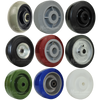


















Plate Casters

Whether you're replacing an existing caster or picking out a new one, there are several steps to determining the right plate caster for you. To see our guide on picking out a stem caster instead, click here.
Whether you're starting fresh or replacing casters, remember that plate casters offer both rigid and swivel variants.
Finding a Replacement Caster
To find the right replacement plate caster you must
- Figure out the bolt hole pattern
- Figure out the size of the plate
- Double check the size of the bolt hole
- Determine your overall height and whether or not its matters
The key is to accurately measure the plate to avoid ordering the wrong caster, which can cause project delays and additional expenses.
1. Figuring out the Bolt Hole Pattern of your Caster
The bolt hole pattern on a plate is the space between the holes where a a bolt screws the caster to an object. The space is measured from the center of one bolt to the center of the other, and the pattern is defined by the horizontal and vertical measurement between the holes.
When measuring, if possible, directly measure the holes from the object for the most accurate measurement.
Some other variables to consider:
- Some casters have slotted holes instead of round holes, which make for different plate patterns. Take note of the pattern the holes are in.
- Not every plate caster has 4 bolt holes: some have 2!

2. Figuring out the Size of your Plate
The size of the plate is simply the length and width of the plate of the caster.
Some plate casters can have the same bolt hole pattern but the overall size differs. This isn't necessarily a problem, unless the caster is mounted with a quick change caster pad, where the caster attachment is based only on the size of the plate, not the bolt hole pattern
It's important to note that some plates are metric, and are typically square-shaped, while standard plate casters have rectangular plates.

3. Check the Size of the bolt Hole
In most cases, the same bolt hole pattern accommodates the same size bolts, but occasionally there are plates that use smaller bolts and have smaller impact. To ensure the replacement caster will fit, measure the diameter of the bolt hole of the current caster.

4. Overall Height
The overall height of caster is measured from the bottom of the wheel to very top of the plate. In short, it measures how much the object will be lifted off the ground. This measurement is crucial for those who may have height restrictions or have casters that are hidden or recessed.

For hidden and recessed casters, overall height becomes an issue as it involves another measurement known as the swivel radius. The swivel radius is the distance that the wheel extends outward from its center pivot. Typically, larger wheeled casters will have a greater swivel radius, which may create an issue where the wheel makes contact with something that prevents it from spinning around the full 360 degrees.
Getting a Plate Caster for New Projects
If you're not replacing a plate caster directly, but adding casters for the first time, it's recommended to choose from the following common plate sizes below. Selecting one of these sizes will make it easier to find replacement casters, saving you both money and a hassle later on.
Note that standard plates are rectangular, though metric plates are on the market and are square and measured in metric units.
Light Duty Plate Casters
Light duty casters are casters with capacity up to 350 lbs. The most common light duty plate pattern is the 01 mounting plate pattern. Its specifications are:
- Mounting Plate: 2-3/8" x 3-5/8"
- Bolt Hole Pattern: 1-3/4" x 2-7/8" to 3"
- Mounting Bolt Size: 5/16" or smaller
01 mounting plates typically have 350 lbs capacities, though some specialty versions can have higher capacities.

Medium Duty Plate
Medium duty casters have capacity up to 2,000 lbs. The most common medium duty plate pattern is the P50 (or P51) mounting plate pattern. Its specifications are:
- Mounting Plate: 4" x 4-1/2"
-
Bolt Hole Pattern: 2-5/8" x 3-5/8" slotted to 3" x 3"
- Mounting Bolt Size: 3/8" or smaller

Heavy Duty Plate Casters
Casters utilizing this size plate typically have a max capacity of 5,400 lbs capacity.
Heavy duty casters have capacity up to 5,400 lbs. The most common heavy duty plate pattern is the P70 (or P71) mounting plate pattern. Its specifications are:
- Mounting Plate: 5-1/4" x 7-1/4"
-
Bolt Hole Pattern: 3-3/8" x 5-1/4" slotted to 4-1/8" x 6-1/8"
- Mounting Bolt Size: 1/2" or smaller

Overall Height
The overall height of caster is measured from the bottom of the wheel to very top of the plate. In short, it measures how much the object will be lifted off the ground. This measurement is crucial for those who may have height restrictions or have casters that are hidden or recessed.
For hidden and recessed casters, overall height becomes an issue as it involves another measurement known as the swivel radius. The swivel radius is the distance that the wheel extends outward from its center pivot. Typically, larger wheeled casters will have a greater swivel radius, which may create an issue where the wheel makes contact with something that prevents it from spinning around the full 360 degrees.
Final Thoughts
Plate casters are incredibly popular due to their many variants and being able to be used in many different applications. By getting the exact plate caster for your exact needs, you can get the most efficiency and capacity our of your casters!
Need help selecting your next caster? Feel free to contact us or give us a call at (713)-227-1144 and speak with a caster expert (Mon-Fri 7am - 4:30pm CST).
Also in Caster Knowledge

Measuring Threaded Stem Casters
Threaded stem casters can be difficult to measure. Learn how to measure stem diameter, length, and thread pitch for an exact replacement fit.

High Temp Dual Wheel Casters
Discover high-performance dual wheel casters built for low clearances, heavy loads, and extreme temperatures up to 425°F, with excellent rolling and swiveling performance.

CG-MAX Green Poly on Aluminum Caster Wheels
"No Compromise" Casters & Wheels: Discover how wheel diameter, tread shape, bearings, and floor conditions affect rolling performance, and why CG-MAX polyurethane on aluminum wheels deliver efficient, durable performance.


