-
Casters
▾
-
Light Duty Casters Up to 350 Lbs
-
Medium Duty Casters Up to 1,500 Lbs
-
Heavy Duty Casters Up to 40,000 Lbs
-

Track Casters
-
Stem Casters All Stem Types
-
Stainless Steel
-
Pneumatic Casters Ait & Flat Free
-
Furniture Casters All Styles
-
High Temp Casters Up to 550 ˚F
-
Metric Casters
-

Leveling Casters
-
Spring Loaded
-
- Wheels ▾
- By Application ▾
- Accessories & Parts ▾
- Material Handling Products ▾
- Volume / Resale


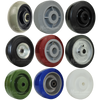


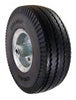
















The Ultimate Guide to Hand Trucks

Our guide to all things hand trucks! Learn about the many details of hand truck that are out there while seeing which one is right for your application.
When it comes down to picking out and replacing parts for your hand truck, consider efficiency, your application, your budget, and personal preferences. If you're local, come visit us and get some hands-on experience with our hand trucks to see what works for you at 320 N. Sampson St in Houston, Texas!
Part 1: Wheels

When it comes to deciding which wheel is right for your needs, consider your application, maintenance needed, the floors the wheel will be used on, wheel diameter and cost.
Types of Hand Truck Wheels
Wheels are one of the most important part of the hand truck, Without wheels, the truck wouldn't go anywhere! Because of this, wheels are one of the most common parts needing to be replaced on a hand truck.
Hand truck wheels can be replaced for a variety of reasons: dissatisfaction, cracked hubs, flat tires, and more. Often dissatisfaction with your wheels may be from using the wrong wheel for the hand truck's application, or from hard treatment of the hand trucks, like slamming or dropping them.
With so many wheel options to pick and choose from, hand truck wheels can be divided into three categories: pneumatic, care-free and solid.
Pneumatic Wheels

Pneumatic wheels are wheels that have air-filled tires.
Being filled with air helps with impacts and cushioning the weight bearing down on the hand truck. In fact, pneumatic wheels provide the most cushion out of all hand truck wheels, because the tread widens out when bearing weight.
One of the major benefits of using pneumatic wheels is that they offer the best experience rolling over rough concrete, ramps, curbs and even grass as compared to other types of wheels.
The downside is, due to being filled with air, their tires go flat and need to be refilled with air periodically, and the tires' tubes may need to be replaced if the wheel is punctured.
Care-Free Wheels

Care-free wheels are used as a compromise between pneumatic and solid wheels. Care-free wheels have similar properties to a pneumatic wheel without the hassle of having to refill the tires.
Care-free wheels provide a bit less cushion than pneumatic wheels but still roll quite well over rough concrete, ramps, and curbs, though they have more trouble with grass. This is balanced out by the fact that they are lower maintenance: they don't need to be refilled and can endure punctures better than pneumatic wheels.
Solid Wheels

Solid wheels typically have fairly stiff treads that don't provide much cushion.
Just like the care-free wheels, solid wheels can withstand punctures. Solid wheels are recommended for use on pavement primarily; they make the hand truck stiff and rigid. Solid wheels will give the user a bit rougher experience rolling over rough concrete, ramps, and curbs but still do the job.
We don't recommend this type of wheel for those who may go in grass as these wheels will make it much harder. Solid wheels are typically a cost effective option over care-free and pneumatic wheels.
Non-Marking Wheels

Another consideration to take in mind when choosing hand truck wheels is whether they will cause damage to the floors they roll on. If used inside on floors that you want to keep clean and undamaged, this might be a good thing to consider.
Non-marking wheels are wheels that don't leave marks. Most hand truck wheels are black, which can leave streaks, but non-marking wheels typically have a gray-colored tread to avoid this.
Wheel Diameter

Hand truck wheels typically come in one of two different diameters: 8 inches or 10 inches. The smaller wheels are more cost effective, but larger wheels roll more easily.
Depending on the hand truck, the axle location may determine which diameter has to be used, because a too-large wheel can make the hand truck lean too far forward (and vice-versa with too-small wheels). Having the correct wheel diameter for your hand truck is essential for keeping the plate flat on the ground.
Higher end hand truck brands like Magliner are able to move the axle up and down to accommodate your preferred size.
Installation

Before purchasing wheels, first measure the wheel already on the hand truck.
Remove at least one wheel for more accurate measurement. Hand truck wheels are typically secured with a cotter pin, push cap, or sometimes just a nut. Loosen and remove this to look at the wheel.
Once removed, measure the wheel's diameter, tread width, hub length, and inside diameter of the bearing. Next, see if the wheel's hub length is offset or centered. Hand truck wheels are almost always off set. For an explanation of offset/centered wheels and directions on how to measure a wheel, click here.

Next, measure the axel of the hand truck. Measure the length of exposed axle and outside diameter of the axle. This determines the maximum hub length and inside diameter of the wheel respectively. For older, rusty axles, clean the rust off for a more accurate diameter measurement and easier installation of the new wheel.
The most common mistake made when installing hand truck wheels is not keeping the wheels secure. Unsecured wheels can cause the bearing to fall out of the center of the wheel, making the hand truck unusable. The wheel must be kept tight with the minimum amount of play, or movement, along the axle. Use washers or spacers to keep the wheel tight if needed.
Part 2: Noses and Frames

Finding the right hand truck for you involves getting the right components for your job and preferences. Just like wheel selection, choosing a nose and frame is essential for the best performance.
Nose / Plate

The nose, or plate, of a hand truck is the part that carries the load. Noses come in all sorts of widths, lengths, cutout shapes, and materials.
When picking a plate, first consider how the hand truck will be used. Will it be used for general purposes or specific cases? Depending on how specific the application, there might be a specialized hand truck already made for the purpose.
If using a hand truck for general purposes, you have more freedom to pick a plate without it affecting day to day operations. If picking a hand truck for specific application, consider what the truck will be carrying regularly.
As a rule of thumb, large plates work well with both large and small items, but small plates don't work well with large items. However a small plate reduces the additional weight of the truck, so it can make moving items easier.
The shape of the items moved also affects the plate. Cylindrical items like kegs and tanks should use a recessed plate, allowing the item to be held further back, and pairing a curved back frame with the recessed plate makes the item even more secure.
Nose Extensions

Nose extensions are for those who really want to maximize items carried or need to carry really large items that need a little more help leaning back.
Generally, nose extensions are foldable and can rest against the frame of the hand truck when not used. Nose extensions vary in size, design and capacity. Thinner nose extensions allow products to be easily pushed on to extension but may have a lower capacity.
For the most part, frame extensions can be used for many types of applications. Airports in particular use carpeted nose extensions not only protecting the luggage from scratches but it also provides a bit of friction to keep them from falling off. Nose Extensions are especially popular for convertible hand trucks that turn into a platform truck as seen in the picture above.

Frames
Frames are the defining part of your dollies purpose. The two most common types of hand truck frames provide a flat surface for your load or a curved back surface to hold cylindrical items.
Flat Frames
Flat surface frames are the most common type of frames used in hand trucks, and can serve a multitude of purposes. These frames are ideal for boxes and other flat items.
They are not suited for carrying cylindrical items because the item can roll off the side of the frame.

Curved Back Frames
Curved back frames are more niche, because they are great for carrying around cylindrical items such as spools of fabric and oxygen tanks, though they also work well with boxes.
Curved frames are typically paired with a recessed plate that secures the item better.

Braced Frames
Braced frames add rigidity to your hand truck, rather than capacity. Braced frames assist with carrying around smaller objects so they don't fall through the frame.
Braced frames also are available with curved backs as well.

Decks
Just like braced frames, deck plates prevent smaller packages from falling through the frame but deck plates provide a solid surf ace.
Decks typically span the entire length and width of the frame. They come in many different types of materials: plastic, aluminum and more.

When it comes time to get a hand truck for your business or personal uses, think about how it will be used and what items you will be carrying. Depending on how specific your application is, there might be a hand truck specifically for it.
Part 3: Handles and Extensions
Now that we've discussed wheels, noses, and frames of hand trucks, we can look at the upper half of the truck: handles and extensions.

Handles
As ever, consider how the hand truck will be used and in what applications prior to selecting the handle. The handle is where someone will be leveraging the load and even leaning items on.
Extension pads offer a comfortable way to lean the hand truck against a shoulder or arm while in motion, and provide cushion when getting smacked in the head as bonus! This is less of a need with smaller length extension, and a pool noodle or towel can be used as an alternative.
When the hand truck is being used with cylindrical items, a curved handle is paired with the curved back frame to let the item seat securely in the frame and avoid contact with the handle. Again, this is less of an issue with short cylindrical items and handles, while long cylindrical items will not rest within the curved frame right if the handle is wrong.
Always consider what you are carrying! Consider the amount of trips needed--an extension or longer handle lets you stack items higher and allows you to take less trips. A long handle provides a stronger point to leverage your load than an extension, but if wanting a hand truck taller than 60 inches, an extension is typically your only option.
If your needs require neither carrying cylindrical or taller loads, selecting a handle is just about personal preference.

Extensions
Extensions are designed to increase the overall height of the hand truck for carrying more items. For example, delivery drivers for bakeries and potatoes chip companies use the tallest extensions they can get to stack as many products on top of each other, decreasing the amount of trips needed to deliver their goods and increase productivity.
Longer length handles essentially serve the same purpose of an extension, but extensions are not designed for applying a downwards force like a handle to leverage a load. Extensions are an accessory, not a substitute for a handle. Hand trucks still require a handle.
For heavier loads it is recommended to get a brace to add rigidity to the extension.

Extension Pads/Covers
Extension pads offer a comfortable way to lean your hand truck and rest it against your shoulder or arm while in motion.
This is less likely to occur with smaller length extensions. One simply could wrap the top of the extension with a pool noodle or a towel as an alternative to the pad.

Do I Need an Extension?
When choosing between a longer handle and a handle with an extension, consider how tall you need your hand truck.
If you want a hand truck taller than 60 inches, typical handles won't make your hand truck any taller, leaving the extension as the better option. Extensions also do come in smaller sizes.
If wanting a hand truck at or below 60 inches tall, it comes down to preference and budget. A handle with an extension tends to be the more economic option than a long length handle.

Part 4: Accessories
Now that we have an idea of what hand truck best suits our application and budget, accessories can fine tune your hand truck to be just perfect.
The accessories Mapp Caster offers below are compatible with Magline and B&P hand trucks.
Accessory Bags
Accessory bags attach to the back part of the hand truck frame, allow you to store anything extra you may need, and are available in many sizes.

Back Panel
Back Panels help keep products from falling through the frame of the hand truck. This becomes especially useful for convertible hand trucks that utilize the frame when it's horizontal with the ground.

Extensions
Extensions make your hand trucks taller and allow you to stack even more products on top of each other. This can help you decrease the amount of trips taken to complete a job. When you want a hand truck taller than 60 inches overall in height, typically an extensions is your only option to make your hand truck taller, over a taller handle.

Extension Pads
Extension pads help provide a bit of cushion to your extension which makes it a comfortable to lean your hand truck back on your shoulders or arms.

Extractor Handle Kit
The extractor handle kit is designed to push the load off of the nose/plate of a hand truck. This reduces the amount of effort needed to unload your load.

Folding Nose Kit
This kit allow you to fold the nose of your hand truck to make your hand truck take up less space. It should be noted that this particular kit requires a nose that doesn't directly rest against the frame to fold back. We offer a special folding hand truck that's nose and frame both folds up for those wanting to take up even less space.

Garment Hook and Brace
Garment hooks provide another step of security by allowing you to loop an item onto the hook. This can assist with an item that may want to fall off the sides of the hand truck.

Keg Hook
Keg hooks give the user more security by keeping a keg secure against the frame. These are available in a fixed option and swiveling option that can be moved backwards when not in use.

Nose Extensions
Sometimes you may find yourself reaching around the hand truck to secure a large item to back of the frame so it doesn't tilt forward off the plate. Nose extensions provide extra length to your nose to help you lean back larger sized objects with ease. Available in many options and lengths!

Retractable 4th Wheel Attachment
The retractable 4th wheel attachment allows you to lean your load back easily and not have have to bear the weight against yourself. The retractable fourth wheel extension folds flush against the frame when not it use.

Stair Climbers
Stair climbers help assist with going down the stairs the stairs when the hand truck is leaned back. The non-marking nylon pads help protect the stairs as the hand truck is descending. Its important to note that some hand trucks may have steel stair climbers but offer little protection.

Wheel Guard Kit
Wheel guards are designed to keep products from touching the wheels while in motion. Wheel guards are useful for when your are carrying something that may droop like bouncy house inflatables. They increase the surface area of the frame making products a bit more secure.

Wings
Wings are designed to sit at the top of the hand truck near the handle and provide a bit more surface area up top. These are great for products being carried that may droop or provide extra stability so they wont fall off to one of the sides of the hand truck easily.

Part 5: Applications
So far, we've discussed the finer details in a hand truck, which can help with building a custom hand truck for your exact needs. However, there are many niche hand truck types that are made for one specific application, with specifically chosen components for lifting specific objects.
Appliance Hand Trucks
Appliance hand trucks have a smaller nose than a standard hand truck. The small nose prevents it from pinching hoses and wires that may be exposed on the underside of an appliance. Appliance trucks also utilize a strap to wrap around and secure the item.

Bakery/Delivery Hand Truck
Bakery and delivery drivers tend to utilize taller hand trucks to stack products and minimize the amount of trips taken. These hand trucks typically use extensions (right between the handle) to make the hand truck even taller.

Brake Hand Trucks
Brake hand trucks make it easier to tilt your hand truck forward and backwards while keeping both feet planted on the ground, rather than having to brace your foot against the axle. Brake hand trucks offer the user a safer way to stop and go by simply squeezing a lever.

Chair Hand Trucks
These specific hand trucks are designed to securely move chairs by lifting them right below the seat. A typical hand truck would provide little to no contact with the chair legs making it an unsuitable hand truck for the job.

Convertible Hand Trucks
Convertible hand trucks act both like a platform truck and a hand truck. These versatile hand trucks can allow the user to utilize the frame horizontally to stack even more items than a regular hand truck. The capacity is typically increased in the 4 wheel configuration. Some convertible hand trucks offer a deck to make sure no items fall through the frame.

File Cabinet Hand Trucks
File cabinet hand trucks are designed to specifically carry filing cabinets. These hand trucks are similar to appliance trucks in the aspect of having a very short nose/plate, but utilize a bar on top to secure the cabinet versus a strap.

Folding Hand Truck
Folding hand trucks are great for those who may be tight on space. Reducing the amount of space taken up by the hand truck can allow you to carry more products and make the most of your trips.

Gas Cylinder Hand Trucks
Gas cylinder hand trucks are designed specifically to secure and transport pressurized gas tanks. These curved back hand trucks typically use a chain to secure the tank and keep it from falling.

Sack Hand Trucks
Sack hand trucks utilize a considerably large plate to hold sacks, which flatten out when stacked on top of each other. Sometimes the frames are tilted back to allow the user to easily tilt the load back for moving.

Stair Descending Hand Truck
This particular hand truck uses a belt with a tread to slowly descend down a staircase. This is great for basements and other areas where you will not have access to an elevator. It should be noted this particular hand truck only allows it to go down a stair case with the belt system.

Steel Drum Hand Trucks
Drum Dollies are specifically designed to carry 55 gallon drums with ease. These beefy hand trucks typically have higher capacities than a normal hand truck. Due to the special forklike nose, these hand trucks can really be utilized for this application only.

Textile Hand Truck
Textile hand trucks are used to carry spools of cloth. These hand trucks have a recessed frame and recessed plate to hug and secure the spool during transit.

Water Hand Trucks
Water hand trucks help carry large bottles of water. These type of hand trucks also come in a convertible hand truck configuration for holding even more bottles.

These are just a few hand trucks that exist for specific applications. Not all of these hand trucks are readily available on Mappcaster.com, but if you would like to inquire about a specific hand truck, give us a call or contact us and we would be happy to help!
Part 6: Maintenance

Preventative Measures

Before jumping into hand truck maintenance, we need to understand that some issues are caused by user, outside of the scope of maintenance. This kind of damage is extremely common to hand trucks, caused by carelessness or ignorance while using these tools.
The most common way to damage hand trucks is to drop them from heights, and especially while carrying a load. Dropping a hand truck from heights can cause a surprising amount of damage, including cracked hubs, broken wheels, broken brackets, bent axles, bent plates and more. Avoid doing this at all cost!
Another preventive measure to take is to avoid carrying more weight than the hand truck can carry. Going down something like a small step could break it, due to the shock load or the force hitting the hand truck when it hits the ground.
For those who have convertible hand trucks, try to avoid slamming parts when locking them into place. For our Magliner and B&P hand trucks, slamming the handle bars shut can bend the spreader rod, which prevents the handle from being secured and wears down the latch.
Lastly, a very simple step you can take to give a hand truck a longer life is to keep it out of the weather!
Maintenance Tips

Hand trucks don't require much maintenance if they are being used properly. You can narrow down hand truck maintenance to a few specific steps:
- Air up your tires when your tires lose air (if wheels are pneumatic)
- Grease your bearings (if ball bearings aren't sealed)
- Change the bearings when they rust or stop rolling
- Change your wheels when the tread gets too small or falls off
- Use the correct bearing size for your axle to minimize vertical movement. We recommend using calipers to measure your wheels inside diameter or your axles outer diameter to insure the axle will go through the wheel.
- When reinstalling your wheel, keep the horizontal movement on the axle to a minimum. We recommend using washers to keep everything tight. This prevents the wheel's bearings from walking out of your wheel and lead to other issues like the photo above.
- Axles can rust and make it hard to install a new wheel. Use some sandpaper or steel wool to remove surface rust to make the installation process easier.
- Noses wear down over time from scrapping the floors especially at the tip. A grinder can be used to reshape the tip and extend the life of your plate/nose
- Change out your wear strips when they wear down (if your hand truck has wear strips)
These can help keep your hand trucks functioning correctly and prevent you replacing parts prematurely!
Final Thoughts
Hand trucks are incredibly useful tools which can be used in a huge variety of applications. Each part of the tool can be specified and picked out to increase their effectiveness in your specific use case.
Need help picking out a hand truck? Curious about our other products? Contact us or give us a call at 800-345-0425 (Mon-Fri 7:00am - 4:30pm CST).
Also in Caster Knowledge

Kitchen Casters: Caster Rigs
Commercial kitchen casters face heat, grease, chemicals, and washdowns. Learn how stainless steel rigs, seals, and dust covers improve caster durability

Measuring Threaded Stem Casters
Threaded stem casters can be difficult to measure. Learn how to measure stem diameter, length, and thread pitch for an exact replacement fit.

High Temp Dual Wheel Casters
Discover high-performance dual wheel casters built for low clearances, heavy loads, and extreme temperatures up to 425°F, with excellent rolling and swiveling performance.


