



















Kitchen Casters: Caster Wheels

Commercial kitchens are one of the toughest environments you can put a caster in. Heat, grease, oil, chemicals, and wash downs will quickly wear down the caster and expose weak components.
If your casters aren't built for rough treatment like this, they'll fail much sooner. The components you choose for your casters play a major role in their durability, service life, and how frequently they need to be replaced.
With so many different wheel materials available, it can be hard to choose which will best be suited to your kitchen. With some help, picking the right wheel can save you time and money, so you can focus on the food instead.
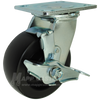
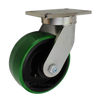
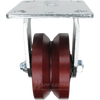
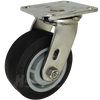
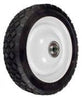
Most kitchens utilize thermoplastic rubber, polyurethane, polyolefin, retort, high-temp nylon, or epoxy wheels. All of these materials have applications in commercial kitchens, but each prioritizes different characteristics. To determine which wheel material is right for your kitchen, consider the following:

Floor Protection
Another common consideration when choosing wheel materials is floor protection. Harder wheels like polyolefin, retort, high-temp nylon, and epoxy wheels are non-marking, but getting dirt underneath the tread can scratch your floors.
If protecting your floors is a priority, we recommend sticking with thermoplastic rubber or polyurethane. Both offer better floor protection while helping provide quieter, smoother movement.

High Temperatures
High temperatures are one of the biggest factors limiting your caster wheel choices. Excessive heat can quickly damage a wheel, causing it to deform, crack, or become more difficult to roll.
If your casters need to enter ovens or other extreme temperatures, your choices are limited to materials like high-temperature nylon and high-temperature epoxy. Other materials will take heat damage, making them roll less easily and potentially causing them to fail. You might also be surprised by how much heat damage caster wheels can experience without ever entering an oven. Spilled grease can melt caster wheels, rendering them inoperable. Even if your casters aren't entering an oven, high-temp wheels are a great choice in case of a spill.
Retort wheels, while not rated for temperatures found in ovens or hot grease, still boast a higher-than-average resistance up to temperatures of 290˚F. This is perfect for kitchen equipment that needs to be sterilized at higher temps.

Environment
Commercial kitchens expose casters to more than just heat. Water, oil, grease, cleaning solutions, and chemicals can all affect wheel performance. Thermoplastic rubber, solid polyurethane, polyolefin, retort, high temperature nylon and epoxy are all very resilient to those environmental factors.
Polyurethane-treaded wheels are a popular choice for commercial kitchens, but often suffer eventual tread separation with frequent exposure to water and chemicals, which weaken the bond between the tread and core. Treads that are both chemically and mechanically bonded to their cores provide better protection against this separation. The best protection of all is to eliminate the core and use a solid polyurethane wheel. No separation if there's nothing to separate! Despite this consideration, polyurethane treaded wheels remain a popular choice in commercial kitchens due to their affordability and floor protection.
Don't forget about your bearings, either! Frequent exposure to water and cleaning chemicals can cause bearings to wear or corrode. Opting for stainless options will help prolong their service life. Additionally, wheels with a plain bore or bushing eliminate this point of failure and will last until they're worn down.
Ease of Rolling
Finally, consider the condition of your kitchen floors and how easily your equipment needs to move.
Softer wheels like TPR and polyurethane roll better over rough and uneven floors. Harder wheels like polyolefin, retort, high-temperature nylon, and epoxy perform best on smooth floors.
The shape of your tread also affects how well your wheel moves. A crowned or rounded tread profile provides better rolling, swiveling, and pivoting because less of the wheel makes contact with the floor.

Your bearings also play a role in rolling equipment. While plain bore wheels or bushings don't assist with rolling, ball bearings provide smoother and easier rolling experience, which makes it easier to move heavier equipment.
Final Thoughts
Commercial kitchens are harsh environments, but the right caster wheel can measure up to the task. Choosing the right materials and components can decrease the cost of replacement, protect your floors, and make your equipment easier to move.
Unsure which wheels are right for your kitchen? Looking to replace a specific wheel you already have? Call us at 800-345-0425, Monday through Friday 7am to 4:30 PM CST, or contact us and get ahold of our caster experts.
Also in Caster Knowledge

Polished Concrete and Wheel Staining
Why some wheels stain polished concrete, and how to choose ones that won't. The wrong caster wheels can leave permanent brown marks on a polished concrete floor. The fix is simple: choose the right wheel material from the start.

Kitchen Casters: Caster Rigs
Commercial kitchen casters face heat, grease, chemicals, and washdowns. Learn how stainless steel rigs, seals, and dust covers improve caster durability

Measuring Threaded Stem Casters
Threaded stem casters can be difficult to measure. Learn how to measure stem diameter, length, and thread pitch for an exact replacement fit.


