-
Casters
▾
-
Light Duty Casters Up to 350 Lbs
-
Medium Duty Casters Up to 1,500 Lbs
-
Heavy Duty Casters Up to 40,000 Lbs
-

Track Casters
-
Stem Casters All Stem Types
-
Stainless Steel
-
Pneumatic Casters Ait & Flat Free
-
Furniture Casters All Styles
-
High Temp Casters Up to 550 ˚F
-
Metric Casters
-

Leveling Casters
-
Spring Loaded
-
- Wheels ▾
- By Application ▾
- Accessories & Parts ▾
- Material Handling Products ▾
- Volume / Resale






















Repair or Replace?

It's common these days to completely replace items that don't work, instead of trying to repair them. This can be blamed on convenience, laziness, and the planned obsolescence of some products.
This is a common practice in the caster world as well, where people will completely replace a product because one component has gone bad. While we are happy to give customers what they want, there are many good casters that go to waste, when one part could be replaced or repaired instead of the entire caster.
Identifying Common Problems
The wheel isn't rolling how it should, or won't roll at all?
If your wheels aren't rolling as they should, it may be time to grease them. If they aren't rolling at all, it could be as simple as something caught in the wheels like hair, deep fried oil or general debris. Rusty bearings, especially for older casters or casters living in hostile environment will seize your wheels. Sometimes your wheels tread is flat, making it harder to move.

Swivel caster isn't swiveling as it should or at all?
Swivel casters that aren't swiveling as they should could simply lack grease. Some casters have grease zerks that allow you to shoot grease right into the swivel section of a swivel caster to keep it moving as it should. Overloading your swivel caster can also make it harder to move/pivot. An easy fix, simply remove some of the weight. Just like the wheels, debris may enter the swivel section preventing it from moving. Rust is another common issue that will partially or completely seize all motion. Lastly, your swivel caster may have a worn-out swivel section where the ball bearing that assists swiveling are falling out.

What's Salvageable?
Casters are typically made of 4 major components: rig, wheel, axle and nut. These 4 parts can be exchanged at any time. Depending on your particular use, WD40 might be your friend.
Caster Wheels
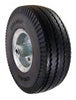
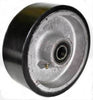
Flat spots in caster wheels occur in one of 2 ways. When a caster wheel has been sitting for a while with a heavy load, it can create a flat spot. These are typically permanent, especially in plain rubber wheels. When debris gets caught in a wheel, the wheel may end up seizing entirely, leading to a flat spot when trying to be moved unless cleared first. If your wheel gets a flat spot, it’s time to replace it.

Tread failure or de-treading is when your wheel's tread comes off. We recommend replacing the wheel when this happens. The tread's purpose is to provide cushion and in some cases to protect the floors while in motion. It’s very rare that the wheel would be salvaged and retreaded. Retreaded wheels typically go on special machinery or wheels that are no longer manufactured. Casters wheels are so common that retreading isn’t a cost effective practice for casters.

If your caster wheel has a bearing and no longer rolls as it should, it may need some grease which can typically be applied through the grease zerk on the wheel or the axle. Caster wheels that utilize ball bearings or tapered bearings typically can’t be greased as the bearings are sealed. These casters wheels may require manual application to apply grease. The same goes for most smaller sized and cheaper made casters overall. If grease doesn't solve the problem, there might be an obstruction or the bearings are rusty. We recommend replacing your bearings when they rust. Medium to heavy duty casters wheels usually have replaceable bearings, while finding

Caster Rigs
If you're replacing the wheel already, it’s a great time to check on the health of your rig. If the wheel and rig need to be replaced, it might make sense to purchase the whole caster brand new. The number one reason to replace your rig is if there is too much play between the forks of the rig and mounting plate or stem. If the ball bearings are falling out, that’s a key indicator of too much play. Rust is another good reason to replace a rig, especially if it inhibits swiveling. Debris is a bit tricky, as it might be hard to clean between the ball bearings, but pushing grease through your caster rig’s grease zerk may help clear some of that. We recommend swivel section seals for swivel casters that will be in dirty environments to prevent these problems before they occur. For the most part, rigid rigs will not need to be replaced as there are no moving parts and only need to be replaced when they’re damaged or rusted out.

If you decide that it is time to replace your caster rig or entire caster, make an upgrade that will last longer. Most swivel casters are designed with a kingpin (essentially, a bolt that runs through the rig) that holds the plate or stem to the fork of the caster. Swivel casters without kingpins have a more robust, redesigned swivel section that addresses that Achilles heel of most casters.

Axles & Nuts
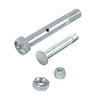
Axles and nuts are by far the cheapest part to replace on a caster. We don’t find it necessary to replace the axles and nuts unless they are worn down or are rusted out. If you decide to replace your axle, we recommend using an actual axle instead of regular bolt because the threads on a regular bolt can eat into your caster wheels. Some axles offer an opportunity an upgrade by having grease zerk to help grease the wheel. It should be noted that casters utilizing a nylon lock nut shouldn’t enter high temperature environments as the nylon on the nuts can melt and make a mess.

Cheaper Made Casters Overall
We find that some of the cheaply made casters are made to be easily discarded. Cheaper made casters tend to utilize riveted on axles versus a screwed on axle that secured with a nut. In order to replace the wheels on these casters, it requires you to grind the rivet off. Then find a replacement axle and nut. While this isn’t an easy task, it can save you some money.

Final Thoughts
In a world quick to discard, it's essential to rethink the way we approach equipment maintenance, especially when it comes to casters. Some solutions can be straightforward. Just greasing your casters alone can extend the life of your casters.
Understanding when to replace and when to repair becomes pivotal. Swapping out an entire caster is the easy route and in some cases makes sense. Alternatively, spending money towards a targeted upgrade could result in a longer lasting solution like purchasing kingpin-less rigs or purchasing the right wheel for your application.
If you have any questions, need further assistance or suggestions, feel free to contact us or give us a call at 800-345-0425 (Mon-Fri 7:00am - 4:30pm CST).
Also in Caster Knowledge

Kitchen Casters: Caster Rigs
Commercial kitchen casters face heat, grease, chemicals, and washdowns. Learn how stainless steel rigs, seals, and dust covers improve caster durability

Measuring Threaded Stem Casters
Threaded stem casters can be difficult to measure. Learn how to measure stem diameter, length, and thread pitch for an exact replacement fit.

High Temp Dual Wheel Casters
Discover high-performance dual wheel casters built for low clearances, heavy loads, and extreme temperatures up to 425°F, with excellent rolling and swiveling performance.


