-
Casters
▾
-
Light Duty Casters Up to 350 Lbs
-
Medium Duty Casters Up to 1,500 Lbs
-
Heavy Duty Casters Up to 40,000 Lbs
-

Track Casters
-
Stem Casters All Stem Types
-
Stainless Steel
-
Pneumatic Casters Ait & Flat Free
-
Furniture Casters All Styles
-
High Temp Casters Up to 550 ˚F
-
Metric Casters
-

Leveling Casters
-
Spring Loaded
-
- Wheels ▾
- By Application ▾
- Accessories & Parts ▾
- Material Handling Products ▾
- Volume / Resale


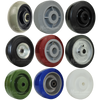


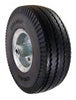
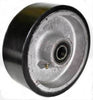
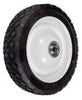




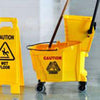











Restaurants and Kitchen Casters

Restaurants and kitchens tend to be a hostile environment for casters. Kitchens can expose casters to water, oil, grease, steam, and cleaning chemicals.
Choosing the right rig and wheel materials is essential for ensuring caster longevity.
Rig Material
Rigs typically come in one of two compositions: carbon steel and stainless steel.
Carbon steel is the material used for most casters, strong and dependable, but has limited rust resistance. Stainless steel resists rust better, buying time before the caster rusts and needs to be replaced, but is more expensive.
Using stainless steel is especially recommended in kitchens which are washed down with chemicals and water, since they are most vulnerable to rust.
Recommended Caster Types
Plastic
Plastic are the go-to wheels for kitchens. Plastic is quite affordable, resistant to water, oil, grease, steam and cleaning chemicals, and non-marking.
However, they may require more effort to roll on uneven floors, and they might not be entirely floor-safe due to potential dirt under the tread causing scratches.
Note that if your restaurant handles fry foods, hot grease spills can melt these wheels.
Retort
Retort is essentially like a high end plastic. Most noted for their white color, retort wheels give you a bit more capacity than plastic while being able to withstand temperatures up to 290˚F.
Just like plastic, retort wheels are resistant to water, oil, grease, steam and cleaning chemicals. Retort wheels may require more effort to roll over things as it is quite a hard wheel and isn't floor safe wheel as dirt under the wheel may scratch the floor.
High Temp Nylon
High temp nylon wheels are capable of entering ovens while being resistant to water, oil, hot grease, steam and cleaning chemicals.
This wheel type is the most durable option out of all the recommended kitchen casters. An excellent choice for restaurants that specialize in fry foods. This wheels is non-marking but dirt underneath the wheel could scratch your floors.
Thermoplastic Rubber
Thermoplastic rubber offers floor protection. Among these caster options, Thermoplastic rubber can roll on the nicest of floors like hardwood or tile while being resistant to water, oil, grease, steam and cleaning chemicals.
Thermoplastic rubber also has a soft tread that will roll well over cracks or rough floor as opposed to the plastic and high temp nylon wheels.
Polyurethane Treaded Wheels
Polyurethane treaded wheels are an example of the principle: "common practices aren't necessarily correct". While you can technically use any caster for any applications, it doesn't mean it's necessarily the right one.
Polyurethane treaded wheels are popular in restaurants despite their susceptibility to water, oil, grease, steam and cleaning chemicals. These factors often lead to a common issue known as de-treading, where the polyurethane tread separates from the wheel. This choice is favored for floor protection and affordability, but isn't a great option for kitchen wash down.
Alternatively, you can utilize a solid polyurethane wheel which protects floors and resists oil, grease and cleaning chemicals. Keep in mind however, solid polyurethane is a premium option that is suitable for kitchens, but might be excessive elsewhere.
Final Thoughts
Need help selecting your next caster? Feel free to contact us or give us a call at (800)-345-0425 and speak with a caster expert (Mon - Fri 7am - 4:30pm CST).
Also in Caster Knowledge

Grip Neck Casters and Sockets
This guide walks you through choosing and installing grip neck stem casters, ensuring that furniture looks great and functions well. Select the right caster to protect your furniture and floor, and ensure long-lasting performance.

Weight and Capacity
Buy casters with the right amount of weight in mind, to make sure their capacity holds up! Learn here the considerations to ensure you buy the correct ones.

Casters and Sockets
This guide walks you through choosing and installing a stem caster and socket, ensuring that furniture looks great and functions well. Select the right caster and socket to protect your furniture and suit your application.
Mapp Caster & Supply, Inc | 320 N. Sampson St | Houston, TX 77003 | 800.345.0425
© 2026 Mapp Caster. Website by Trailblaze Media


