




















Weight and Capacity

In our day to day routine, gauging the correct weight capacity in our activities is important in order to avoid any unforeseen problems. This could range from the payload capacity on a truck, how much you can carry on an airplane, or to our favorite, effective weight capacity on casters.
While it seems like calculating the required capacity for a caster would be as easy as dividing by four, there are underlying variables that need to be considered before finding a definitive weight capacity!
Load Weight
Equipment weight isn't the only thing to think about. Always consider the load it will potentially be carrying, as well as the absolute maximum load in to avoid excessive limitations.

Floor Surface
Uneven surfaces mean that casters may not all have contact with the floor at the same time, leading to uneven load distribution. Remember that capacity calculation is based on the minimum number of casters that will be in contact with the floor at any time.

Our best tip for calculating capacity with this in mind: divide the load weight by three, not four. This means you have a whole caster's capacity worth of safety cushion in the event of uneven surfaces or unforeseen stops and starts. It might cost more upfront, but the protection of your employees and protection of your product while it's being transferred makes it worth the cost of the higher-capacity casters.

Wheel Selection
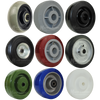
Choose wheels based on your needs, with capacity being the top priority. As your need for capacity increases, wheel options become more limited, sometimes requiring trade-offs.
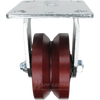
Once you find a wheel capable of supporting the required weight, other considerations fall into place. Note that harder wheels perform better on smooth surfaces, while softer wheels are more suitable for rough surfaces.

Movement
A caster's weight capacity is indicative of how fast it can move (usually at walking speed). If the equipment attached to the caster is moving faster than walking speed, then it's likely that the weight capacity will be reduced. Increased speed will lead to increased wheel temperature and greater friction, lowering potential weight capacity.

Caster Components
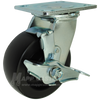
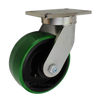
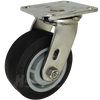
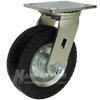
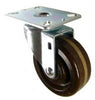
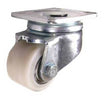
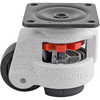
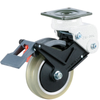
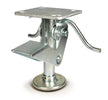
The components of a caster can really help impact its carrying capacity. For example, kingpin-less rigs can help increase the capacity of a caster as well as its longevity. The use of tapered bearings in heavy duty casters can also help increase the capacity of your caster. The use of a plate instead of a stem can also increase capacity because a stem attaches from a singular point which can be a weak point.

Final Thoughts
Taking a moment to determine your capacity limits for your intended usage can be huge in improving safety and performance.
If you have any questions or need further assistance, feel free to contact us or give us a call at 800-345-0425 (Mon-Fri 7:00am - 4:30pm CST).
Also in Caster Knowledge

Kitchen Casters: Caster Wheels
Learn how to choose the best commercial kitchen caster wheels by comparing heat resistance, floor protection, chemical resistance, and rolling performance.

Polished Concrete and Wheel Staining
Why some wheels stain polished concrete, and how to choose ones that won't. The wrong caster wheels can leave permanent brown marks on a polished concrete floor. The fix is simple: choose the right wheel material from the start.

Kitchen Casters: Caster Rigs
Commercial kitchen casters face heat, grease, chemicals, and washdowns. Learn how stainless steel rigs, seals, and dust covers improve caster durability


