-
Casters
▾
-
Light Duty Casters Up to 350 Lbs
-
Medium Duty Casters Up to 1,500 Lbs
-
Heavy Duty Casters Up to 40,000 Lbs
-

Track Casters
-
Stem Casters All Stem Types
-
Stainless Steel
-
Pneumatic Casters Ait & Flat Free
-
Furniture Casters All Styles
-
High Temp Casters Up to 550 ˚F
-
Metric Casters
-

Leveling Casters
-
Spring Loaded
-
- Wheels ▾
- By Application ▾
- Accessories & Parts ▾
- Material Handling Products ▾
- Volume / Resale





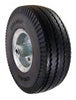
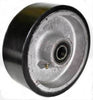
















What to Replace? What to Salvage?

When your caster starts getting older or less reliable, you might consider salvaging some of its parts, instead of buying the entire caster again. It doesn't hurt to save money, and sometimes it just makes sense. Why replace the whole caster when there are still serviceable parts?
Parts of a caster
There are three main components that make up a typical caster. If one or more of these parts are still in good shape, they can be kept and used in a new caster:
- Rig
- Wheel
- Axle
Rig
The rig is the metal frame that surrounds the wheel. It typically has a plate or stem to mount the caster to an object.
To check the rig, look at the following:
- Make sure that no part seems bent. Rigs bend when they are overloaded, so check the forks holding the axle to see if it looks bent or asymmetric.
- If you have a swivel caster, check to see if the swivel section is loose, or if the ball bearings are at risk of falling out (or already have)
A damaged rig can be dangerous, so if it is in terrible shape, please replace it immediately.
Wheel
The wheel rolls, what did you think? It provides mobility, and can come in many different varieties.
You should replace the wheel if:
- The tread has fallen off
- The wheel has been worn down to a significantly smaller diameter
- The hub (center part) is busted or cracking from overloading
If your wheel has bearings, check to see if the bearings are seized up, rusted, or no longer functional. Most of the time the bearing could take a bit of grease, but trying to clean a rusted bearing is more trouble than it's worth.
Again, a damaged wheel can be dangerous, so if it is in terrible shape, please replace it immediately.
Axle
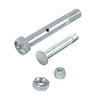
The axle is the piece of metal that holds the wheel and rig together, the part that the wheel rotates on. The axle is crucial, essentially the glue that holds everything together.
The most common axle issues are
- Rusty axles
- Bent axles
When a caster is often outdoors or in wet environments, they can rust. A bit of surface rust is alright and can be cleaned up with a wire brush, but axles with deeper rust should be replaced.
Axles aren't often bent, but it is technically possible. If so, it should be replaced as the caster is probably having a lot of trouble rolling.
Axles are relatively cheap, but play a crucial role.
Final Thoughts
When your casters are looking long in the tooth or rolling less efficiently, it may be time to make replacements. Some parts are more resilient than others, though, so you can save money by keeping the intact parts and only replacing the damaged parts.
Not sure what needs to be replaced? Interested in new caster parts? Give us a call at 800-345-0425 or contact us, and one of our caster experts can assist you!
Also in Caster Knowledge

Kitchen Casters: Caster Rigs
Commercial kitchen casters face heat, grease, chemicals, and washdowns. Learn how stainless steel rigs, seals, and dust covers improve caster durability

Measuring Threaded Stem Casters
Threaded stem casters can be difficult to measure. Learn how to measure stem diameter, length, and thread pitch for an exact replacement fit.

High Temp Dual Wheel Casters
Discover high-performance dual wheel casters built for low clearances, heavy loads, and extreme temperatures up to 425°F, with excellent rolling and swiveling performance.


