

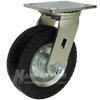
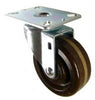
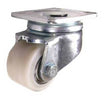
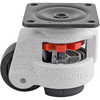


















Caster Rigs

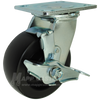
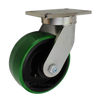
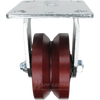
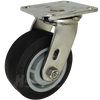
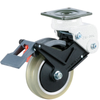
A caster is made up of four major components: the wheel, axle, nut, and rig. The rig is the part of the caster that holds the wheel and allows the caster to be attached to an object.
The rig plays a major role in a caster's performance. It determines the mounting method, whether the caster swivels or stays rigid, how much weight the caster can support, and how long it will last.
When choosing the right caster for your application, it's important to understand the type of rig you need and how its design affects performance.
Types of Rigs
Mounting Methods
There are two common mounting methods for caster rigs: plate and stem. Each has advantages depending on the available mounting space, required capacity, and application.
Plate Rigs

Plates come in many different sizes and shapes to accommodate a variety of mounting requirements.
Plate-mounted casters are generally more secure than stem-mounted casters because they typically use four bolts to attach the caster to an object, distributing the mounting points across a larger area. Stem casters, on the other hand generally rely on a single mounting point.
When space allows, we recommend using a plate caster for a more secure mounting solution.
You can read more about plate casters here.
Stem Rigs

Stem casters come in many sizes and styles, including threaded, grip ring, grip neck, expanding, and stemless designs.
Because stem casters generally rely on a single mounting point rather than multiple bolts, they can provide a less secure mounting solution than plate casters. This can be helped by using a larger-diameter stem, which tend to be stronger than smaller ones.
Proper installation is essential to prevent future damage with a stem casters. A correctly installed stem caster should be fully seated in its mounting socket, with no part of the stem exposed or visible beneath the object.
To Swivel Or Not To Swivel?
Caster rigs are also classified by how they move. Swivel rigs allow a caster to turn and change direction, while rigid rigs keep the wheel aligned in a fixed direction.
Swivel Rigs

Swivel rigs allow an object to move in different directions. This movement is made possible by the swivel section, which connects the mounting plate or stem to the forks that hold the wheel.
The swivel section is a critical part of the caster because it must allow rotation while keeping the rig together and supporting the load above it. With its moving parts, the swivel section can be a potential point of failure.
Depending on the rig's design, the swivel section may have exposed ball bearings. These bearings can rust when exposed to moisture, making it more difficult for the caster to swivel. Swivel seals can help protect the bearings from dirt, liquids, and debris, reducing the risk of those problems.
There are two main types of swivel rigs:
- Kingpin swivel rigs: These use a kingpin to hold the swivel assembly together. The design is similar in concept to the kingpin used in a skateboard truck.
- Kingpinless swivel rigs: These do not use a kingpin to hold the swivel assembly together. They generally last longer than kingpin swivel rigs because kingpins can stretch over time, potentially allowing the ball bearings to fall out.
The best choice depends on your application's load requirements, operating environment, and budget.
Rigid Rigs

Rigid rigs keep their wheel aligned in a fixed direction, helping an object travel in a straight line during transit. This is helpful in some applications, but a cart or piece of equipment fitted with rigid casters can be more difficult to maneuver through tight spaces.
Rigid casters are commonly paired with swivel casters to balance directional control and maneuverability, although the ideal configuration depends on the application. For more information, see our guide to caster configurations and how to configure a cart.
Because rigid rigs have no swivel mechanism, they have fewer moving parts and often outlast their swivel counterparts. Most rigid rigs use a plate mounting system, with very rare stem-mounted rigid caster alternatives.
Rig Capacity

The rig plays a major role in determining a caster's load capacity. Overall caster capacity depends primarily on the capacity of the wheel and the rig. The rated capacity of a complete caster is limited by whichever component can support the least amount of weight.
Kingpin vs. Kingpinless Capacity
Kingpinless swivel rigs generally offer greater load capacity than comparable kingpin swivel rigs because of their stronger swivel design. The size of the swivel section also affects capacity: larger swivel sections can typically support heavier loads.
Kingpinless rigs often come at a higher price, which is one reason why kingpin swivel casters remain a common choice.
Rigid rigs may have a higher load capacity than their matching swivel rigs. A rigid rig is generally a solid assembly, whereas a swivel rig consists of multiple components and includes a swivel section that can be a structural weak point.
Wheel Position and Load Capacity

The position of the wheel within the rig also affects load capacity.
When the wheel is positioned closer to the center of the caster, it places less stress on the swivel section, which can allow the caster to support a greater load. This is one reason many jack casters position their wheels closer to the rig.
Positioning the wheel further from the center reduces a caster's capacity because increases stress on the swivel section. However, this arrangement can make the swivel caster easier to pivot and move.
When selecting a stem caster, keep in mind that options become much more limited when the required capacity exceeds 700 pounds per caster. Plate-mounted casters are the more common solution for application requiring higher capacity.
Always check the rated capacity of the complete caster to ensure that it will meet your application's requirements.
Rig Longevity

The design of a caster rig has a significant impact on its service life. Rigs with fewer moving parts generally have fewer components that can wear out or fail. This is one reason rigid rigs often last longer than swivel rigs.
If your application requires swivel casters, a kingpinless design will generally offer a longer service life than a comparable kingpin design because it eliminates the kingpin, which can stretch over time.
However, the operating environment is just as important as the rig's design.
Heat Resistance
Caster rigs can generally withstand temperatures around 600°F, although the actual rating depends on the rig's construction and design. Adding a swivel seal may lower the maximum temperature rating.
When selecting casters for high-temperature environments, consider the individual temperature ratings of every component, including the wheel, rig, bearings, and any seals or other accessories. The complete caster must be suitable for the temperatures it will encounter.
Water, Chemicals, and Corrosion
Water and chemicals can be hard on caster rigs and other caster components, potentially causing rust and premature failure.
Swivel seals help prevent liquids, dirt, and debris from entering the swivel bearings. However, they cannot prevent corrosion on every part of the rig. The rig's material and construction must also be considered when selecting casters for wet or corrosive environments.
For these applications, we recommend considering casters with stainless steel rigs. Stainless steel can help extend caster life in environments where moisture and corrosion are concerns, although it comes at a higher initial cost.
When deciding whether stainless steel is worth the investment, consider the total cost of ownership, including the cost of replacement rigs, labor, equipment downtime, and how frequently replacements would otherwise be needed.
The right material can help reduce maintenance and extend service life, making it important to evaluate the conditions in which your casters will operate.
Rig Accessories
Certain accessories can improve a caster's performance and help adapt it to specific applications. Two common options are swivel seals and swivel locks.
Swivel Seals

Swivel seals are designed to protect the ball bearings in a swivel rig from dirt, liquids, and debris.
By limiting contaminants entering the swivel section, seals can help reduce corrosion and extend the life of the bearings. This is particularly useful in environments where casters are regularly exposed to moisture, cleaning solutions, or debris.
The trade-off is that a sealed swivel section may not rotate as freely as an unsealed one. In other words, you may sacrifice some ease of swiveling in exchange for additional protection for the beraings.
Before choosing a sealed rig, consider the balance between environmental protection and the maneuverability required for your application.
Swivel Locks

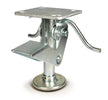
Swivel locks allow you to lock a swivel caster in a fixed direction, effectively giving it the directional behavior of a rigid caster when the lock is engaged.
Rigid casters help maintain direction during transit and are often useful in large, open areas. A configuration using all swivel casters, on the other hand, can be easier to maneuver in tight spaces.
Swivel locks offer a way to combine these advantages by allowing you to choose when a caster can swivel and when it should remain aligned.
For more information on choosing the right combination of swivel and rigid casters, see our guide to caster configurations and how to configure a cart.
Final Thoughts
Choosing the right caster rig involves more than selecting a mounting style. You also need to consider load capacity, maneuverability, operating temperature, exposure to water or chemicals, and the expected service life of the caster.
Plate and stem mounts each have their place, while swivel and rigid rigs serve different purposes. Accessories such as swivel seals and swivel locks can further help tailor a caster to your application's needs.
Have questions about picking the right rig for your application? Need help getting your equipment moving? Give us a call at 800-345-0425 (Mon-Fri 7:00 AM - 4:30 PM CST) or contact us. We'd be happy to help you find the right solution!
Also in Caster Knowledge

Kitchen Casters: Caster Wheels
Learn how to choose the best commercial kitchen caster wheels by comparing heat resistance, floor protection, chemical resistance, and rolling performance.

Polished Concrete and Wheel Staining
Why some wheels stain polished concrete, and how to choose ones that won't. The wrong caster wheels can leave permanent brown marks on a polished concrete floor. The fix is simple: choose the right wheel material from the start.

Kitchen Casters: Caster Rigs
Commercial kitchen casters face heat, grease, chemicals, and washdowns. Learn how stainless steel rigs, seals, and dust covers improve caster durability


