-
Casters
▾
-
Light Duty Casters Up to 350 Lbs
-
Medium Duty Casters Up to 1,500 Lbs
-
Heavy Duty Casters Up to 40,000 Lbs
-

Track Casters
-
Stem Casters All Stem Types
-
Stainless Steel
-
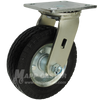
Pneumatic Casters Ait & Flat Free
-
Furniture Casters All Styles
-
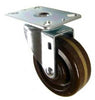
High Temp Casters Up to 550 ˚F
-
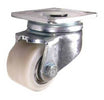
Metric Casters
-

Leveling Casters
-
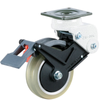
Spring Loaded
-
- Wheels ▾
- By Application ▾
- Accessories & Parts ▾
- Material Handling Products ▾
- Volume / Resale


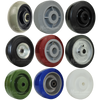












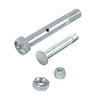
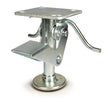

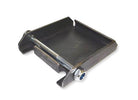
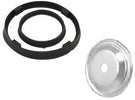





Caster Brakes

There are 2 main types of brakes. Brakes that lock just the wheel f rom moving
& brakes that lock the wheel & swiveling section (of a swivel caster) from
moving. There are many types of brakes that essentially accomplish the same goal
by different methods, but what's most important is knowing what brakes are right for
you.
What do I need to consider and know before purchasing brake casters?
Before purchasing brake casters,
consider why you need a brake. Is it
convenience? Uneven or sloping floor?
Preventing a future liability? Depending
on your application & environment, one
brake might suit you better than another.
Consider the environment these casters will be living in. In general, if you casters are
gonna live in a wet environment, its ideal to use stainless steel components including
the brakes. Be mindful of how you plan to access your brake. Do you care if the
brake can be engaged by a pedal or not? Consider the brakes orientation in
movement. For example, if a carts being pushed from the rear with swivel casters
in the rear, it might be convenient to have the brake at the furthest horizontal point
of the caster for easy access. Consider the amount of times this brake might
used & the weight it will keep from moving.
As a eneral rule, sof ter wheels on a caster are more ef f ective with
braking than harder wheels. With a soft wheel, your brake is able to dig a bit into
the tread (not cut the wheel) & really get a good grip on the wheel as opposed to
harder wheels. Caster brakes can sometimes be as simple as a piece of metal against
a wheel or a rubber pad. Brakes that have a rubber pad on them help assist
with braking on harder wheels as opposed to a plain piece of metal.
Brakes that lock just the wheel
The two main types of brakes that lock just the wheel are side lock & f ace contact.
Outside of these two main types of brakes remains a few honorable mentions with
some unusual ways of securing the wheel. Some casters use a pin that's directly
inserted into these pre-drilled holes in the sidewall of the wheel to secure the wheel.
Some use a bolt that's threaded to the side of the caster that digs directly into the
wheel. These two types mentioned are technically side locking brakes, but they're so
unusual I wouldn't lump them together with the industry standard ones.
Side Lock Brakes
The two most popular types of side lock brakes are top lock & cam lock. Top lock
brakes are one of the most common brakes you will see on a caster. The top lock is
characterized by having an upside down "L" shaped piece of metal that
applies pressure from the top to the wheel. The cam lock brake is a brake that applies
pressure to the side of the wheel's hub to keep it from moving. Out of these two
types of side lock brakes, the top lock is the most reliable. With these types
of brakes, the more pressure you apply to the pedal of the brake, the more
secure that caster wheel is. User error could occur with these side lock brakes
because they don't provide feedback to the user like other brakes; face contact
brakes push back on you when your engaging the brake, then you feel a distinct pop/
break to know it's engaged.

Face Contact / Tech Lock Brakes
Face contact brakes or tech lock brakes are brakes that apply pressure to the tread of
the wheel. This brake is engaged by pressing down on a pedal or a lever & that
presses the brake pad directly towards the tread of the wheel. As mentioned
previously, face contact/tech lock brakes are less likely to have a user error as you
are able to feel the brake engaged as opposed to a side lock brake. These types of
brakes fight you a bit then have distinct pop/break that lets you know the brake is
engaged. This type of brake is also more
secure than side locking brakes which is
why they are common in heavier duty
casters that hold high capacities. Some
face contact brakes may have an adjustable
brake pad that can help you get a little more
force down on to the wheel (the user will
have to apply more force though). These
adjustable brake pads are useful when it
comes time to replace your wheel & you
choose another type of wheel.

Compression and Decompression Brakes
Typically found in offices, compression brakes on a caster are engaged when their is
weight on the casters. When the weight is lifted off the casters, the casters are able to
move around freely. For example, a person sitting in the chair wouldn't be able to
move the chair until they got up out of it. Decompression brakes on a caster do the
complete opposite. When their weight is on the casters, they move freely. When their
is weight off the casters the brakes are engaged.

Brakes that lock the wheel and swivel section
Total Lock Brakes

Total lock & face contact brakes are quite similar in how they secure the wheel.
They both give the user a distinct break/pop that lets them know that the brake is
engaged. This helps eliminate some of the human error in knowing knowing
whether or not the brake has been engaged. The main difference is how face
contact/tech lock as well as side lock
brakes leave the swivel section f ree
to move.T otal lock brakes lock the
wheel & the swivel section of a swivel
caster. Total lock brakes brakes allow
very minimal movement from the swivel
section if any; keeping your cart or
equipment more secure.
Alternative Braking Systems
Floor Locks

Similar to caster brakes, floor locks
can lock your equipment f rom a
single point instead of multiple
points. They're convenient to
use because you don't have to go
around locking each individual caster
to keep your equipment from
moving. Floor locks do not swivel & do
not allow your equipment to move
f rom side to side. Floor locks also
become more ef f ective with more
weight. Floor locks are idea f or smooth surf aces (like warehouse floors) so
the pad can get the most traction. To learn more info on floor locks, click here
to view/read our article on them.
Central Locking System
A central locking system is similar to a floor lock in the way that you can stop
your equipment from pressing down on a lever/pedal from a singles
spot. Where these two types of systems differ is that the floor lock presses a
pad to floor & the central locking system engages all of the caster brakes
in the system. This type of system is also ideal for sloped floors. Central
locking braking systems are common in hospitals & other medical
facilities.

Dead Man Braking System
The dead man braking system is a system that uses a wire and lever (similar to a bike)
to secure the equipment. The main difference is that the lever must be squeezed at all
times for the casters to roll freely. Similar to a push/self propelled lawn mower lever &
how it must always be engaged for it to be running. Once the lever is released the
cart comes to a stop. If an employee was to lose balance & lose control/grip of their
cart, their cart would come to a stop. This type of system is designed with safety in
mind & could possible prevent a work place injury. This is a type of Braking system is
also ideal for slopes.

Final Thoughts
Also in Caster Knowledge

Measuring Threaded Stem Casters
Threaded stem casters can be difficult to measure. Learn how to measure stem diameter, length, and thread pitch for an exact replacement fit.

High Temp Dual Wheel Casters
Discover high-performance dual wheel casters built for low clearances, heavy loads, and extreme temperatures up to 425°F, with excellent rolling and swiveling performance.

CG-MAX Green Poly on Aluminum Caster Wheels
"No Compromise" Casters & Wheels: Discover how wheel diameter, tread shape, bearings, and floor conditions affect rolling performance, and why CG-MAX polyurethane on aluminum wheels deliver efficient, durable performance.


