-
Casters
▾
-
Light Duty Casters Up to 350 Lbs
-
Medium Duty Casters Up to 1,500 Lbs
-
Heavy Duty Casters Up to 40,000 Lbs
-

Track Casters
-
Stem Casters All Stem Types
-
Stainless Steel
-
Pneumatic Casters Ait & Flat Free
-
Furniture Casters All Styles
-
High Temp Casters Up to 550 ˚F
-
Metric Casters
-

Leveling Casters
-
Spring Loaded
-
- Wheels ▾
- By Application ▾
- Accessories & Parts ▾
- Material Handling Products ▾
- Volume / Resale


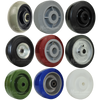


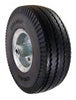
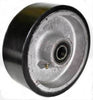
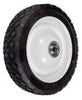
















Hard & Soft Rubber Caster Wheels

There are many types of rubber wheels in the casters world. Just to name a few, there are soft rubber, hard rubber, thermoplastic rubber, elastic rubber, neoprene rubber, conductive and high temp rubber casters.
Soft and hard rubber are the most basic types of rubber; a no frills kinds of wheel. Each has its benefits and are suited to different uses, which may be important for your application.
Qualities of Rubber
Rubber wheels are a great economic option for outdoor and indoor applications. Rubber wheels are able to endure wet environments (as long as it doesn't have a iron core).
Rubber wheels are ideal for rolling on pavement and other floors that don't need protection as it can mark floors when rolled and dragged.
Rubber wheels do tend to develop flat spots when they bear high capacities of weight over a long period of time, and especially soft rubber wheels. In such a situation, we would recommend using a thermoplastic rubber or plastic wheel instead. Rubber wheels are ideal for applications that keep them in motion, like work carts or platform trucks.
Solid Rubber vs Rubber Treaded Wheels
Rubber wheels can either come as a single solid piece of rubber, or as a rubber treaded wheel.
Solid rubber wheels tend to be smaller as compared to rubber treaded wheels.
The main difference between the two is that rubber treaded wheels' tread can come off over time, leaving the caster to roll on its core (which could be made of plastic, nylon, aluminum, or iron). The material of the core however does not affect capacity as much as it does with other treaded wheels.

Capacity
When in comes to capacity, rubber tends to be on the lower end. The hardness of the rubber directly affects the wheel's carrying capacity as harder rubber wheels carry more capacity than softer rubber wheels.
Rubber in general gives you a significant diminishing return of capacity as the wheels increase in size. For example, a thin rubber wheel that is 1-1/4" wide or less will have a capacity comparable to other wheels its size. However, comparing thicker wheels: our 10" x 3" rubber on iron wheel has a capacity of 1,000 pounds as compared to a phenolic resin wheel of the same size, which has a capacity of 2,900 lbs. Only about 1/3 of the capacity!
When rubber is pushed past its load capacity it tends to tear.
Which type of rubber rolls better?
It's recommended to use soft rubber wheels for rougher floors as they roll over cracks and debris easier. For smoother floors, with little debris, a harder rubber wheel is ideal. Increasing the overall diameter of the wheel will help assist with rolling regardless of wheel composition.
Applications
Below are just a few commonly recommended applications that are great with rubber wheels:
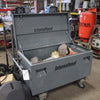
- Job Boxes
- Platform Trucks
- Pry Bars
- Shelf Carts
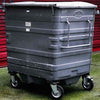
- Trash Can Dollies
- Warehouses
- Welding Carts
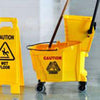
- Wet Environments

Final Thoughts
Rubber wheels are a general purpose wheels for those who aren't worried about their floors and don't need to carry high capacities.
Need help finding the right caster for your project? Contact us or give us a call at 800-345-0425 (Mon-Fri 7:00am - 4:30pm CST).
Rubber Wheels
Rubber Casters
Also in Caster Knowledge

Kitchen Casters: Caster Rigs
Commercial kitchen casters face heat, grease, chemicals, and washdowns. Learn how stainless steel rigs, seals, and dust covers improve caster durability

Measuring Threaded Stem Casters
Threaded stem casters can be difficult to measure. Learn how to measure stem diameter, length, and thread pitch for an exact replacement fit.

High Temp Dual Wheel Casters
Discover high-performance dual wheel casters built for low clearances, heavy loads, and extreme temperatures up to 425°F, with excellent rolling and swiveling performance.


